Erb’s Palsy Attorneys Serving Providence and Rhode Island
At Mandell, Boisclair & Mandell, our Providence Erb’s palsy lawyers help children and their families seek justice following this devastating birth injury. Understanding the immediate and long-term complications that can arise from this result of medical malpractice, we are here to assist families in addressing these issues through swift and personalized legal action.
Erb’s palsy is usually diagnosed through a physical examination shortly after birth. A pediatrician may notice that the baby isn’t moving one arm normally, has weakness on one side, or holds the affected arm in an unusual position.
During the examination, the medical provider may evaluate:
- Movement in the shoulder, elbow, wrist, and fingers
- Muscle strength in each arm
- Grip and reflexes
- Sensation in the affected arm
- The position in which the baby holds the arm
- Differences between active and passive movement
Doctors should also determine whether another injury is causing the baby’s symptoms. For example, a broken collarbone or upper-arm bone may make movement painful. A careful examination helps distinguish a fracture from a nerve injury.
Doctors may also use diagnostic tests, including:
- X-rays to identify fractures
- Ultrasound or MRI scans to evaluate the joints, nerves, and surrounding tissue
- Electromyography to examine muscle activity
- Nerve conduction tests to determine whether signals are reaching the muscle
It’s important to bear in mind that diagnosing Erb’s palsy may require more than one examination. Repeated examinations during the first month may be necessary to diagnose or rule out the condition.
Many children with Erb’s palsy recover some or all movement and feeling in the affected arm. However, the outlook often depends on the location and severity of the nerve damage.
Brachial plexus nerve injuries may be classified in several ways, including:
- Neurapraxia: The nerve is stretched but not torn. These injuries often heal without surgical intervention.
- Neuroma: Scar tissue forms around the injured nerve and may interfere with nerve signals.
- Rupture: The nerve is torn, but remains connected to the spinal cord.
- Avulsion: The nerve root is pulled away from the spinal cord.
Mild stretch injuries may improve within several weeks or months. More serious injuries have a less certain prognosis.
A ruptured nerve generally doesn’t heal on its own. An avulsed nerve can’t simply be reattached to the spinal cord, although nerve grafts may help to restore some function.
When recovery is possible, it can also take time. Some children may need two years or more to recover fully.
Even after treatment, a child may continue to experience:
- Muscle weakness
- Limited shoulder or elbow movement
- Joint stiffness
- Loss of sensation
- Differences in arm or hand growth
- Difficulty with fine motor tasks
Regular examinations are important. Changes in shoulder, elbow, wrist, and hand movement can help specialists evaluate whether the nerves are recovering.
Even temporary nerve damage can result in medical expenses, parents needing to take time away from work, and many other financial and emotional consequences. The Providence Erb’s palsy attorneys at Mandell, Boisclair & Mandell can examine all the ways your child’s injury may impact your family, and fight for the fair and full compensation you deserve.
Surgery might be considered when a serious brachial plexus injury is unlikely to recover adequately through therapy alone. The decision often hinges on which nerves were injured, the type of damage done, and how much movement returns during the first several months.
Treatment often begins with physical therapy and guided range-of-motion exercises, which can help:
- Maintain flexibility
- Preserve movement in the shoulder and elbow
- Reduce joint discomfort and stiffness
- Prevent muscle shortening
- Protect the developing shoulder joint
Surgery is typically recommended only when little to no improvement occurs with other methods. Surgical options may include:
- Nerve grafting
- Nerve transfer
- Tendon transfer
- Joint release
- Bone realignment
Babies with continuing weakness may need a multidisciplinary brachial plexus team who can monitor recovery and make the appropriate recommendations.
With or without surgery, treating Erb’s palsy can take time, result in significant medical expenses, and impact every aspect of your family’s life. All of these things need to be considered when you are pursuing compensation.
At Mandell, Boisclair & Mandell, our Rhode Island Erb’s palsy attorneys work to ensure your compensation is sufficient to provide your child with the best treatment options while also addressing all of the other issues the condition has caused.
An Erb’s palsy diagnosis doesn’t automatically prove medical malpractice. A difficult delivery can result in brachial plexus injury even when medical professionals provide appropriate care.
The central legal questions are:
- Did a medical provider fail to meet the accepted standard of care?
- Did that failure cause or contribute to the child’s injury?
Answering those questions requires a careful review of the pregnancy, labor, delivery, and newborn records.
Possible concerns may include:
- Failure to recognize significant risk factors
- Failure to respond appropriately to shoulder dystocia
- Excessive pulling or twisting of the baby’s head or neck
- Improper use of forceps or vacuum extraction
- Failure to use accepted delivery methods
- An unreasonable delay in performing a C-section
- Poor communication among members of the delivery team
Still, not every case involving one of these circumstances is malpractice. Injury alone doesn’t establish negligence. Qualified medical experts may be needed to compare the provider’s decisions and actions with the care reasonably expected under the circumstances.
The experienced Rhode Island Erb’s palsy attorneys at Mandell, Boisclair & Mandell work to obtain all relevant records. We consult with the appropriate experts, work with specialists in multiple fields, and work to determine whether your child’s injury resulted from an unavoidable complication or a preventable medical error.
Evidence of preventability may come from records created before, during, or after delivery. No single document usually tells the entire story. Erb’s palsy attorneys and medical experts often need to reconstruct the sequence of events from many different sources.
Important evidence can include:
- Prenatal records. These may document maternal diabetes, estimated fetal size, abnormal fetal position, previous shoulder dystocia, or other risk factors.
- Labor records. These can show the length and course of labor, medications administered, changes in the baby’s condition, and decisions made by the medical team.
- Delivery notes. These may identify shoulder dystocia, the maneuvers used to release the shoulders, and whether forceps or vacuum extraction were used.
- C-section records. These can help experts evaluate when surgery was considered, recommended, or performed.
- Newborn examinations. Early findings may document weakness, paralysis, fractures, abnormal reflexes, breathing problems, or unusual arm positioning.
- Imaging and nerve tests. X-rays, MRI scans, ultrasound, electromyography, and nerve conduction tests may establish the nature and severity of the injury.
- Therapy and specialist records. These can document the child’s progress, treatment needs, continuing limitations, and long-term prognosis.
The timing of the records may also matter. Delivery notes written immediately after birth may be especially important when determining what maneuvers were used and how the medical team responded to an emergency.
Medical literature and professional guidelines can provide additional context. Experts may use these materials to determine whether the delivery team properly recognized and managed complications.
At Mandell, Boisclair & Mandell, our Providence Erb’s palsy attorneys know how to examine complex medical records to identify errors, oversights, and instances of negligence. We take the time necessary to identify all liable parties and hold each one accountable for the harm they have caused your child.
Erb’s palsy is a type of brachial plexus birth injury, but the terms don’t always mean the exact same thing.
The brachial plexus is a network of nerves that extends from the spinal cord through the neck and into the shoulder, arm, hand, and fingers. These nerves control movement and carry sensory signals.
A brachial plexus birth injury occurs when part of this nerve network is damaged during pregnancy, labor, or delivery. The location of the damage determines which muscles and movements are affected.
Brachial plexus birth injuries may result in:
- Erb’s palsy usually affects the upper nerves. It often limits shoulder movement and the ability to bend at the elbow.
- Klumpke’s palsy generally affects the lower nerves. It may cause greater weakness than Erb’s palsy in the hands and wrist.
- Total plexus palsy affects the entire nerve network. It may cause severe weakness or paralysis throughout the arm.
Of these, Erb’s palsy is by far the most common birth injury.
A baby with Erb’s palsy may be unable to lift or rotate the arm, but may retain some movement in the wrist or fingers. Children with more extensive injuries may have weakness throughout the entire arm and hand.
Doctors may initially use the broader “brachial plexus injury” while they determine which nerves are affected. However, the diagnosis may become more specific after repeated examinations, imaging, or nerve testing.
At Mandell, Boisclair & Mandell, our Providence Erb’s palsy attorneys can help families recover compensation following all types of brachial plexus birth injuries. We are thorough in our evaluation, making sure the location and severity of nerve damage are accurate, so we can assess future medical and other needs and help your family seek every penny you are due.
What Is Erb’s Palsy?
Erb’s palsy is an injury that occurs when the network of nerves near a baby’s neck and shoulder—known as the brachial plexus—is damaged during childbirth. This injury, which can lead to numbness, paralysis, and a lack of muscle control in the arm, shoulder, hand, and fingers, can be the result of medical negligence during the delivery process.
The impact of Erb’s palsy on a child can range from temporary weakness to permanent physical disabilities. The condition can also have long-term emotional and social repercussions for both children and their caregivers.
Early intervention and treatment are essential for improving quality of life for injured babies. However, recovery is often costly, involving immediate and sustained medical care, various forms of therapy, and the need for other types of specialized assistance.
If you suspect that your child’s injury was caused by medical malpractice, our Providence Erb’s palsy lawyers are here to help. Contact us at 401-273-8330 for a FREE and confidential consultation right away. Our firm fights for injured children—and their families—throughout Rhode Island and Massachusetts.
Common Causes of Erb’s Palsy
In the United States, two out of every 1,000 babies are born with Erb’s palsy. This is an injury caused by damage to the nerve network that controls movement and sensation in the arms and hands. The type and severity of the injury play a direct role in its complications and long-term impacts.
Brachial plexus injuries that may result in Erb’s palsy include:
- Neurapraxia Injuries: These occur when the nerve is stretched but not torn.
- Rupture Injuries: These occur when the nerve fibers are torn, but not to the point where they detach to the shoulder and spine.
- Avulsion Injuries: These occur when the nerve roots are completely detached from the spinal cord.
After a nerve has been torn and subsequently heals, it may form scar tissue, known as a neuroma. Neuroma injuries can compress the remaining healthy nerve segments, obstruct signal transmission to the muscles, affect arm mobility and function, and cause great pain.
The leading cause of brachial plexus injuries during birth is shoulder dystocia, an issue that occurs when a baby’s shoulder becomes trapped behind the mother’s pelvic bone during delivery. This situation can quickly escalate, requiring immediate intervention by the attending medical team. Great care is required to reduce the risk of an excessive application of force to the baby’s head, neck, or shoulders. Excessive force when addressing shoulder dystocia can stretch or tear the brachial plexus nerves leading to the development of Erb’s palsy.
Risk Factors for Shoulder Dystocia
Certain conditions increase the risk of shoulder dystocia during childbirth. Large babies—a condition known as macrosomia—are at higher risk for this complication. Prenatal conditions, such as gestational diabetes, which can contribute to a baby’s larger size, must be considered when making a birth plan to help reduce the risk of complications.
Additionally, issues such as first-time labor and delivery, a history of previous deliveries involving shoulder dystocia, prolonged labor, or the use of assistive delivery methods such as forceps or vacuum extraction, can elevate the risk of shoulder dystocia. Failure to consider the mother’s history, reacting slowly to labor complications, and improper or forceful delivery may all be types of medical negligence or malpractice when they result in harm.
A Medical Professional’s Duty of Care
Medical professionals, such as OB/GYNs, other doctors, and nurses, have a responsibility to uphold a specific standard of care. When they fail to uphold this standard, serious birth injuries can occur. During labor and delivery, attending medical staff are expected to be cautious, placing the safety of mother and child first, even if pre-existing causes are not present. This includes monitoring closely for signs of distress and examining the mother at the first indication of potential complications.
If a baby’s shoulders become stuck inside the birth canal, medical professionals must use safe medical maneuvers to deliver the baby. This includes decisions to perform a timely c-section when necessary. Failure to do so may result in serious harm to the child.
When a doctor or nurse’s deviation from the acceptable standard of care results in harm, they may have committed medical malpractice. Having an experienced attorney investigate your baby’s injury can help your family determine how best to proceed.
From conducting thorough investigations to representing your interests in negotiations and court proceedings, our Providence Erb’s palsy lawyers are here to provide the support you need. If your child suffered harm during birth and you suspect medical negligence played a role, we encourage you to reach out for a complimentary case review to learn how we can help.
Erb’s Palsy Symptoms
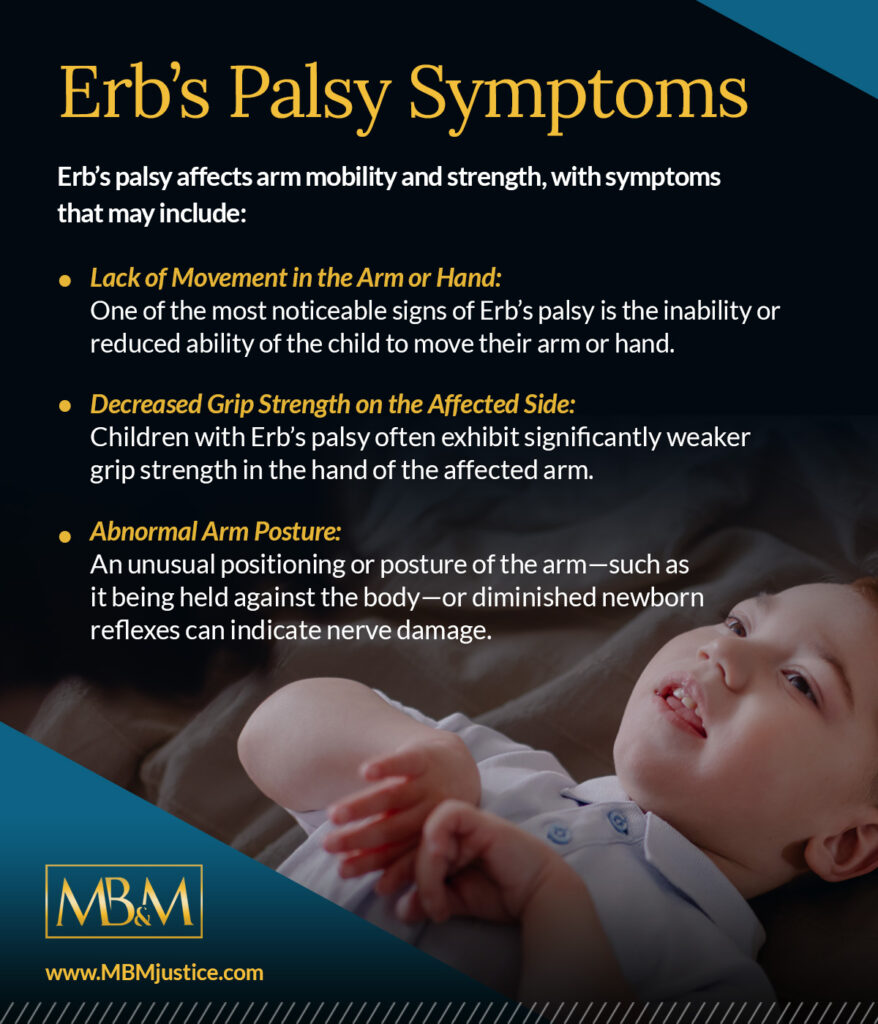
Erb’s palsy affects arm mobility and strength. Early diagnosis and intervention can greatly improve outcomes, making it important for parents to be aware of potential symptoms. These may include:
- Lack of Movement in the Arm or Hand: One of the most noticeable signs of Erb’s palsy is the inability or reduced ability of the child to move their arm or hand. This can range from minor difficulty to complete paralysis.
- Decreased Grip Strength on the Affected Side: Children with Erb’s palsy often exhibit significantly weaker grip strength in the hand of the affected arm.
- Abnormal Arm Posture: An unusual positioning or posture of the arm—such as it being held against the body—or diminished newborn reflexes can indicate nerve damage.
When diagnosed swiftly, Erb’s palsy may improve with treatments including physical therapy, occupational therapy, and, in some cases, surgery, which can help to improve nerve function and muscle strength.
If you suspect medical negligence contributed to your child’s condition, you might be entitled to compensation to cover physical injury, medical expenses, ongoing care, therapy, and more. The Providence Erb’s palsy lawyers at Mandell, Boisclair & Mandell have been providing support and legal representation for babies and their families for close to 50 years. We are committed to helping families navigate the complexities of birth injury claims, working to ensure injured children have access to the resources they need to make the fullest recovery possible.
Long-Term Complications Linked to Erb’s Palsy
Erb’s palsy often produces immediate consequences. It can also affect a child’s muscle development, bone growth, and more. The extent of nerve damage plays a pivotal role in determining the severity of long-term effects, which can range from minor challenges to substantial disabilities.
Long-term complications of Erb’s palsy may include:
Persistent Weakness in the Affected Arm
Ongoing weakness is a common outcome of Erb’s palsy, which may limit a child’s ability to perform tasks that require strength and dexterity. Activities such as lifting, carrying, or even simple tasks like tying shoelaces can become challenging, necessitating adaptive techniques or devices.
Reduced Fine Motor Skills
Fine motor skill impairment affects a child’s ability to execute tasks requiring detailed hand movements, such as writing, buttoning clothes, or handling small objects. This can impact educational progress and independence, making supportive educational and occupational therapy essential.
Emotional and Psychological Effects
Beyond physical limitations, children with Erb’s palsy may face emotional and psychological challenges, including social isolation, frustration, and reduced self-esteem. Professional counseling and support groups may be necessary for both the child and family to foster resilience and emotional well-being.
Damages Available Through Legal Action
Pursuing legal action for Erb’s palsy can result in compensation for medical expenses, physical therapy, surgery, adaptive equipment, and related financial concerns. Legal action can also help families obtain compensation for the child’s pain and suffering, along with the impact the injury has and will continue to have on the child’s and family’s quality of life.
At Mandell, Boisclair & Mandell, our Providence Erb’s palsy attorneys strive to secure the compensation necessary for immediate medical needs, emotional and physical struggles, and the long-term care and support injured children may require. We advocate tirelessly for our clients, helping to ensure they have the resources they need to access the best possible sources of rehabilitation, education, and emotional support.
How Mandell, Boisclair & Mandell Can Help
Navigating legal options following a birth injury can be overwhelming for families already coping with the challenges of an injured child. Having a knowledgeable Providence Erb’s palsy lawyer by your side can help you better understand your rights and options.
At Mandell, Boisclair & Mandell, our attorneys have distinguished themselves through their experience, empathy, and unwavering commitment to our clients’ rights and well-being. We are proud to offer:
- Experienced Medical Malpractice Representation: Our attorneys bring decades of experience with claims related to OB/GYN malpractice. Our legal team excels at uncovering medical evidence, selecting the right experts, and effectively litigating these complex cases.
- Comprehensive Case Investigations: We are thorough in our approach to gathering evidence, consulting with medical experts, and preparing each case for both negotiations and trial. Our comprehensive investigations ensure that every aspect of your claim is supported by solid evidence, helping to improve the chances of a favorable outcome.
- Unmatched Results: Our track record speaks for itself, with many significant verdicts and settlements that have helped families receive necessary resources for medical treatment, rehabilitation, and future care. We are dedicated to achieving the best possible outcome for your family.
- No Fee Promise: Understanding the financial strain that Erb’s palsy can place on a family, we operate on a contingency fee basis. This means you pay nothing unless we secure a settlement or win a verdict in your favor, alleviating the financial risk of pursuing your case.
Beyond our legal experience and proven results, we offer compassion and understanding to every family we represent. Through accessibility and responsiveness, we’re here to provide support both in and out of the courtroom, ready to answer your questions and provide reassurance when you need it most.
Contact Our Providence Erb’s Palsy Lawyers to Learn About Your Options and Rights
If your child sustained an injury during labor or delivery, Mandell, Boisclair & Mandell is here to help your family seek justice. Contact us online or call 401-273-8330 to schedule a FREE claim evaluation with one of our Providence Erb’s palsy attorneys today. We fight for children and their families throughout Rhode Island and Massachusetts.