Brachial Plexus Injury Attorneys Serving Rhode Island & Massachusetts
The first signs of a brachial plexus injury often involve weakness, limited movement, or paralysis in one of the newborn’s arms. Because the brachial plexus controls movement and sensation from the shoulder through the arm and hand, symptoms depend on which nerves were injured and how severely they were damaged.
Parents and healthcare providers may notice that:
- One arm moves less than the other
- The affected arm appears limp or weak
- The baby has difficulty bending the elbow or moving the shoulder
- Grip strength is weaker on one side
- The arm rests in an unusual position
- Normal newborn reflexes are reduced or absent on one side
Early recognition of brachial plexus injury in a newborn is important. Unusual weakness or a lack of movement following delivery might indicate a serious problem, but prompt treatment can often help prevent long-term complications.
At Mandell, Boisclair & Mandell, our newborn brachial plexus injury attorneys know what signs to look for when reviewing medical records. If your baby has exhibited signs of a birth injury, we can review the medical records, identify negligence, and help you understand your options at no cost to you.
A brachial plexus birth injury is usually diagnosed through a physical and neurological examination of the baby’s arm, shoulder, hand, reflexes, and range of motion. Reviewing what happened during the delivery may also help show if there was an increased likelihood of injury due to the action or inaction of medical staff.
During an examination, a healthcare provider may evaluate:
- Whether the baby can move the shoulder, elbow, wrist, and fingers
- Muscle strength and tone
- Reflexes on each side of the body
- Palmar grip strength
- Sensation and response to touch
- Signs of related injuries, such as a fractured clavicle
In some cases, imaging or neurological testing may provide additional information. Tests including electromyography and nerve-conduction studies can assess nerve function, while X-rays, CT scans, and MRIs may be used to identify fractures or damage to surrounding tissues and structures.
With brachial plexus birth injuries, it’s important to conduct repeated evaluations on the baby. The pattern of recovery over the first weeks and months can help physicians determine how serious the injury may be.
When repeated and invasive testing is made necessary by negligence, your family should not be forced to absorb the cost. The brachial plexus birth injury lawyers at Mandell, Boisclair & Mandell take the time to accurately assess medical expenses. Fair and full compensation should include all current and future medical costs.
Yes. Some brachial plexus injuries improve or heal without surgery, especially when the nerves were stretched rather than torn or detached. However, recovery varies significantly depending on the type and severity of the nerve damage. For example, a mild stretching injury like neuropraxia will resolve as the nerves heal. Ruptures and avulsions are much more severe, however, and can cause lasting limitations.
There isn’t a single recovery timeline that applies to every child. Doctors generally look for increasing movement and strength during the first several weeks and months after birth. If progress at one month is limited, a multidisciplinary team of medical specialists may be needed to plan and provide future care.
Even when improvement occurs, follow-up care may be necessary to monitor muscle strength, joint movement, bone development, and your child’s ability to use the affected arm normally as they grow.
There are costs associated with both short-term and long-term newborn brachial plexus injuries. At Mandell, Boisclair & Mandell, our birth injury team brings nearly five decades of experience to each case. We know the law. We understand the process. And we can help you secure the total compensation you’ll need to provide the best possible care for your child.
Treatment for brachial plexus birth injury depends on which nerves were damaged, the severity of the injury, and how much function returns during the baby’s first months of life.
Physical and occupational therapy are common parts of treatment. Therapists may teach parents gentle exercises designed to maintain range of motion, strengthen muscles as nerve function returns, and reduce the risk of stiff joints or contractures. Children with severe nerve damage may eventually need surgery.
Possible surgical procedures can include:
- Nerve repair to reconnect damaged nerve tissue
- Nerve grafting to bridge healthy nerve tissue to an injured area
- Nerve transfer to redirect a functioning nerve toward muscles affected by the injury
- Tendon or muscle procedures to improve movement when weakness remains as a child grows
Because nerve recovery occurs slowly, specialists generally monitor babies closely during the first months of life before making certain treatment decisions.
Brachial plexus injuries can range from temporary weakness to permanent disability. Families facing a serious diagnosis may also need long-term therapy and support services.
Understanding that the consequences of a brachial plexus birth injury can extend far beyond the delivery room, the attorneys at Mandell, Boisclair & Mandell consider both immediate and future needs when determining the total compensation to pursue.
Certain factors may increase the risk of difficult delivery and brachial plexus injury, including a large baby, maternal diabetes, prolonged labor, breech presentation, and shoulder dystocia. These issues can make Cesarean delivery necessary.
A C-section can reduce the risk of some brachial plexus birth injuries, but it can’t prevent every case. Whether a C-section was medically appropriate depends on the circumstances surrounding the pregnancy, labor, and delivery.
When a C-section is delayed or not performed, it’s important to know if healthcare providers:
- Recognized known risk factors
- Properly monitored the mother and baby
- Responded appropriately as labor progressed
- Recognized complications during delivery
- Used appropriate techniques when managing an emergency
- Recommended or performed a C-section when the applicable standard of care called for one
Failure to recognize the need for a timely Cesarean section may indicate medical negligence. However, determining whether an earlier C-section could reasonably have prevented a particular child’s injury requires a careful review of the prenatal and delivery records, together with appropriate medical care and expert analysis.
At Mandell, Boisclair & Mandell, our newborn brachial plexus injury lawyers can work with internal and external medical specialists to review records, assess the actions of the medical team, and help you determine if your family may have cause to pursue a birth injury lawsuit.
No. A brachial plexus injury doesn’t automatically mean that a doctor, nurse, or hospital committed medical malpractice. Some injuries can occur even when healthcare providers follow accepted medical standards.
Issues that may warrant an investigation include:
- Failure to recognize significant risk factors before delivery
- Failure to respond appropriately to shoulder dystocia
- Excessive or inappropriate traction on the baby’s head, neck, or shoulders
- Improper use of forceps or vacuum extraction
- Failure to recognize that a C-section was necessary
- Delayed response to serious labor or delivery complications
A poor outcome doesn’t establish negligence. That’s why these cases often require extensive examination of prenatal records, labor and delivery notes, fetal monitoring information, imaging, treatment records, and expert medical opinions.
Mandell, Boisclair & Mandell has nearly 50 years of experience handling complex birth injury and medical malpractice cases. If your child suffered a brachial plexus injury and you have questions about how it happened, our attorneys can investigate the medical evidence, consult the appropriate experts, and help your family determine if medical negligence played a role.
The Providence brachial plexus injury lawyers at Mandell, Boisclair & Mandell have nearly five decades of experience helping families dealing with the aftermath of birth injury seek justice. We are here to listen to your story, carefully evaluate how your child’s injury has impacted their life, and help you determine the best way to seek the fair and full compensation your family deserves.
What Is the Brachial Plexus?
The brachial plexus (plexus brachialis) is a complex network of nerves located near the neck. It is responsible for the intricate web of muscular and sensory functions in the shoulder, arm, and hand. When these nerves are damaged, the consequences can range from mild weakness to complete paralysis in the affected limb, drastically altering the course of a child’s life.
At Mandell, Boisclair & Mandell, our Providence brachial plexus injury lawyers are steadfast in their commitment to advocating for families dealing with all types of birth injuries. We are here to help ensure injured children and their families receive the compensation necessary to cover medical treatments, rehabilitation, and other concerns that may arise following a traumatic birth.
If your child suffered a brachial plexus injury during birth and you suspect medical malpractice or negligence played a role, call Mandell, Boisclair & Mandell at 401-273-8330 to schedule your FREE and confidential case review and learn how our experienced attorneys can help you seek the justice your family deserves.
What Are the Different Types of Brachial Plexus Injury?
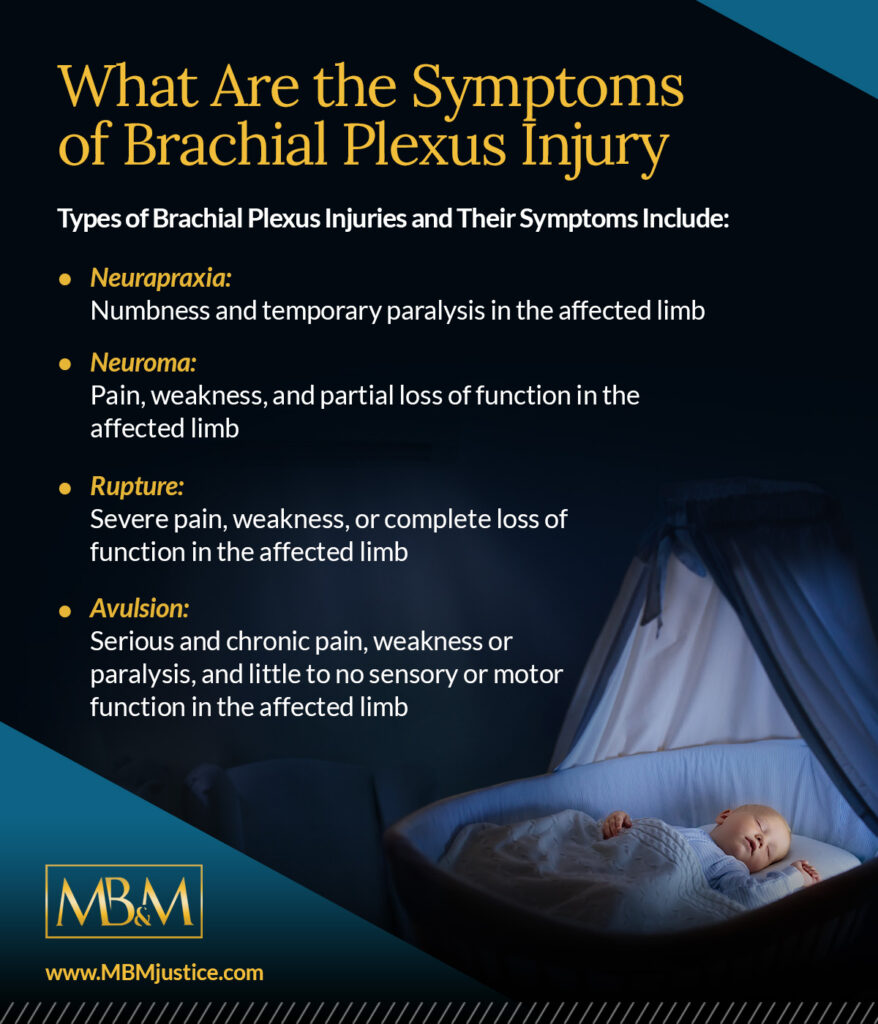
Brachial plexus injuries are distinguished both by how the nerves were damaged and the severity of damage done. Types and symptoms of brachial plexus injury include:
- Neurapraxia: Neurapraxia occurs when the nerves have been stretched. Symptoms typically include numbness and temporary paralysis in the affected limb.
- Neuroma: This occurs when the nerve has been stretched and damaged, leading to scar tissue that presses on the remaining healthy nerve parts. Symptoms include pain, weakness, and partial loss of function in the affected limb.
- Rupture: A more severe type of brachial plexus injury, this occurs when the nerve is torn but not at the spinal attachment. Symptoms may include severe pain, weakness, or complete loss of function in the affected limb.
- Avulsion: The most severe type of brachial plexus injury, an avulsion occurs when the nerve roots are torn from the spinal cord. Avulsions can result in severe, often permanent pain, weakness, or paralysis in the affected limb with little to no sensory or motor function.
Brachial Plexus Palsy
Brachial plexus injuries can result in palsy, a condition marked by muscle weakness or paralysis. The two most common types of palsy caused by brachial plexus injuries are:
- Erb’s Palsy. Erb’s palsy is a condition that primarily affects the upper brachial plexus nerves. Common symptoms include:
- Weakness or paralysis in the arm, limiting movement and strength.
- Reduced mobility in the shoulder and elbow, making it difficult to raise or bend the arm.
- In severe cases, the arm may hang by the side with the forearm turned inward and the wrist bent.
- Klumpke’s Palsy. Klumpke’s palsy affects the lower nerves of the brachial plexus. Less common than Erb’s palsy, this consequence of brachial plexus injury may be characterized by:
- Paralysis or weakness in the forearm and hand, leading to significant functional limitations.
- A distinctive claw-like appearance of the hand due to muscle atrophy and nerve damage.
Symptoms common to both conditions can encompass a loss of sensation in the affected limb, muscle weakness, or a complete inability to move the limb. These symptoms can significantly impact the daily life and development of the child, requiring a tailored approach to treatment and care.
In addition to Erb’s palsy and Klumpke’s palsy, global palsy, in which the entire brachial plexus network is impacted, can lead to a complete absence of movement in the shoulder, arm, and hand. Global palsy may also result in a total loss of sensation throughout the arm.
At Mandell, Boisclair & Mandell, our Providence brachial plexus injury attorneys recognize the extreme difficulties these conditions can create for children and their families. We are committed to providing the comprehensive legal support families need to seek proper compensation for these life-altering injuries.

What Causes Brachial Plexus Injury?
Brachial plexus injuries can occur under a variety of circumstances, including during labor and delivery. When brachial plexus injury occurs during childbirth, it may be a result of excessive force applied to the baby’s head, neck, or shoulders during delivery, especially in difficult or prolonged labor situations. Excess force can stretch, compress, or tear the delicate nerve fibers of the brachial plexus, leading to varying degrees of nerve damage.
Things that may lead to brachial plexus injury during labor and delivery include:
Medical Negligence
This occurs when healthcare professionals deviate from established medical standards, leading to preventable injuries. This can include improper delivery techniques, negligent monitoring, or failure to perform a cesarean section when necessary.
The Providence brachial plexus injury lawyers at Mandell, Boisclair & Mandell focus on injuries stemming from medical malpractice, including improper or aggressive birthing techniques, inadequate monitoring, and failure to respond to labor difficulties promptly. However, establishing negligence is seldom cut and dry. Our attorneys take time to thoroughly investigate the underlying causes of these tragic injuries, helping to ensure all liable parties are identified and allowing us to seek the compensation and justice injured babies and their families rightfully deserve.
Difficult Childbirth
Larger babies, breech presentations, or prolonged labor may increase the risk of brachial plexus injuries. The use of birth-assisting tools like forceps or vacuum extractors can also contribute to the risk if not used with the utmost care.
Long-Term Complications Caused by Brachial Plexus Injury
The impact of a brachial plexus injury can be profound and enduring, touching every aspect of a child’s life. Long-term complications may include:
- Ongoing Medical Treatments
- Chronic Pain and Discomfort
- Permanent Physical Limitations
- Psychological Strain
- Family Stress
The cost of surgeries, therapies, and medical equipment can be substantial, placing a significant financial burden on families. This can be made worse when a child’s condition requires a parent to take time away from work, resulting in a lasting loss of income. Depending on the severity of the injury, the child’s future ability to work and earn a living may be compromised as well. Compensation sought through legal action must take all of these things—and more—into account.
The team at Mandell, Boisclair & Mandell understands the way brachial plexus injuries can impact every facet of a child’s and their family’s life. During your FREE case evaluation, we will consider both the current and long-term implications of your child’s injuries to help determine the full extent of damages. We work to secure compensation that covers current medical expenses along with ongoing care, therapy, potential loss of earnings, and anything else needed for your child’s well-being and family’s financial stability, now and in the future.
Our Providence Brachial Plexus Injury Lawyers Are Here to Listen
At Mandell, Boisclair & Mandell, our commitment to helping children affected by brachial plexus injuries goes beyond mere legal representation. With close to five decades of dedicated legal service, we bring a wealth of experience to each case, helping our clients receive the thorough representation they deserve. We are dedicated to making sure families dealing with the consequences of birth injury are heard, valued, and supported.
Our Providence brachial plexus injury attorneys offer:
Personalized Attention
We understand that each brachial plexus injury case presents its own set of circumstances and challenges. Our attorneys delve deeply into each case, offering tailored legal strategies that align with the specific needs and goals of our clients.
Empathetic Legal Counsel
We recognize the emotional and physical toll that a brachial plexus injury can take on children and their families. Our team provides compassionate support throughout the legal process, ensuring that families feel understood and respected.
Relevant Legal Knowledge
Our attorneys have an in-depth understanding of the medical complexities associated with brachial plexus injuries. Our knowledge of medical malpractice law allows us to build solid cases and advocate for the most favorable outcomes.
Strategic Litigation
With a strategic approach to litigation, we are prepared to take every case as far as needed to secure the best possible result. Our attorneys have been recognized by local and national organizations for their ethics, attention to detail, and effectiveness in both settlement negotiations and jury trials.
Unparalleled Results
Our track record speaks for itself, with many significant settlements and verdicts for birth injury clients. We are relentless in our pursuit of justice and fight for compensation that reflects the true extent of the injury and its impact on the child’s life.
Our reputation is built on a foundation of integrity, competence, and an unwavering commitment to the communities we serve. If your family is navigating the complexities of a brachial plexus injury, we are here to provide the comprehensive legal support and guidance you need.
Contact Mandell, Boisclair & Mandell for a FREE Brachial Plexus Injury Case Review
If your baby suffered a serious brachial plexus injury, medical malpractice may be to blame. Our Providence brachial plexus injury lawyers can review your case for FREE to help you understand all of your legal options. Contact us online or call us at 401-273-8330 to explore how we can help you hold negligent physicians, hospitals, and medical professionals accountable for their negligence, and support you in seeking the justice and compensation you are due.
Mandell, Boisclair & Mandell is located in Providence. We serve clients living throughout Rhode Island and Massachusetts.